North America : Leading Market for Innovation
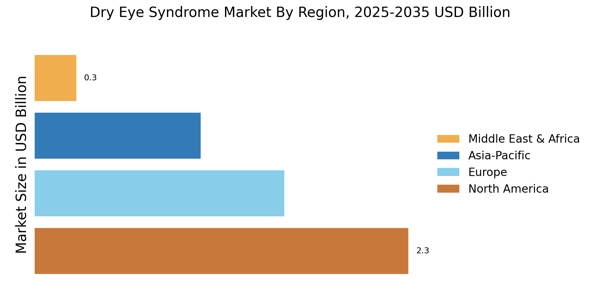
North America leads in the Dry Eye Syndrome Market size, accounting for over 45% of the global revenue in 2025. The region's growth is driven by increasing prevalence of dry eye conditions, heightened awareness, and advancements in treatment options. Regulatory support from agencies like the FDA has also catalyzed market expansion, facilitating quicker approvals for innovative therapies and devices.
- According to CDC, over 12 million Americans aged 40+ experience vision impairment, while healthcare spending exceeds USD 4.5 trillion annually, supporting widespread adoption of advanced eye care treatments and driving strong demand for dry eye syndrome management solutions.
The United States is the primary contributor, with significant market players such as Allergan, Johnson & Johnson, and Bausch Health leading the competitive landscape. The presence of advanced healthcare infrastructure and a strong focus on research and development further bolster the dry eye syndrome treatment market. Canada also plays a vital role, contributing to the overall growth with its increasing adoption of new treatment modalities.
Europe : Emerging Regulatory Frameworks
Europe Dry Eye Syndrome Market size was valued at USD 2.22 billion in 2025, making it the second-largest regional market with a 30% share. The region benefits from a robust regulatory framework that encourages innovation and ensures patient safety. Countries like Germany and France are at the forefront, with increasing investments in healthcare and rising awareness about dry eye conditions driving demand for effective treatments.
- According to ECDC and WHO Europe, over 20% of Europe’s population is aged 65+, while healthcare expenditure accounts for nearly 10% of GDP, supporting increased access to ophthalmic care and driving demand for effective dry eye syndrome treatments across the region.
Leading players such as Santen Pharmaceutical and Novartis are actively involved in the European market, focusing on developing advanced therapies. The competitive landscape is characterized by a mix of established companies and emerging startups, all striving to meet the growing needs of patients. The European Medicines Agency (EMA) plays a crucial role in regulating new treatments, ensuring they meet stringent safety and efficacy standards.
Asia-Pacific : Rapidly Growing Market Potential
Asia-Pacific is rapidly emerging as a significant market for Dry Eye Syndrome Market treatments, accounting for about 20% of the global market share. The region's growth is fueled by increasing urbanization, changing lifestyles, and a rising aging population, which collectively contribute to a higher prevalence of dry eye conditions. Additionally, government initiatives aimed at improving healthcare access are further driving market expansion.
Countries like Japan and China are leading the charge, with major players such as Otsuka Pharmaceutical and Hyaluronic Acid making substantial investments in research and development. The competitive landscape is evolving, with both local and international companies vying for market share. The region's diverse healthcare systems and varying regulatory environments present both challenges and opportunities for market entrants.
Middle East and Africa : Untapped Market Opportunities
The Middle East and Africa region is gradually emerging in the Dry Eye Syndrome Market, holding approximately 5% of the global share. The growth is primarily driven by increasing awareness of eye health and the rising prevalence of dry eye conditions, particularly in urban areas. Government initiatives aimed at enhancing healthcare infrastructure are also contributing to dry eye syndrome treatment market development, creating opportunities for new entrants.
Countries like South Africa and the UAE are leading the dry eye market, with a growing number of healthcare facilities and increasing access to advanced treatments. The competitive landscape is characterized by a mix of local and international players, with a focus on providing affordable and effective solutions. As awareness continues to grow, the region is expected to attract more investments in eye care solutions.